
5 Reasons Why Localized Job Discovery Will Drive India’s Growth
Localised job discovery is pivotal to transforming India’s employment landscape as approximately 85% of India’s workers is in the informal sector. The core challenges is connecting these workers to opportunities near their homes are -
1. Scale of the Challenge
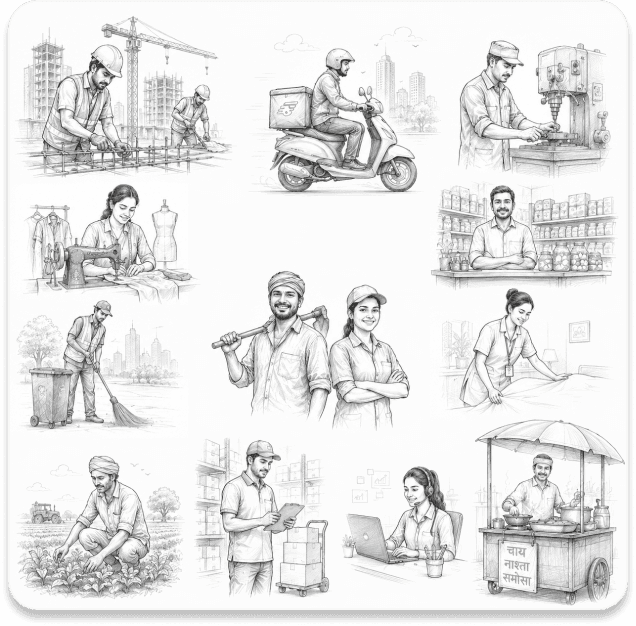
{/* CHANGE: Updated text to frontline, blue-collar, and grey-collar workers in India */}Over 300M frontline, blue-collar, and grey-collar workers in India (including gig workers) rely on informal networks such as village sarpanch or peers. This results in 60% of rural workers remaining unaware of local job opportunities due to information asymmetry.
2. Trust and Referrals
{/* CHANGE: Updated text to blue-collar and grey-collar */}Convincing blue-collar and grey-collar job seekers to engage requires building trust, often through referrals. In white collar settings, referrals help job seekers gain access to hiring managers, serving as a trust signal for employers. In contrast, for blue-collar and grey-collar workers, referrals are critical for job seekers, as the burden of trust lies with the job provider. These workers, often small scale farmers in villages seeking seasonal work, prioritize safe environments, minimal exploitation, and timely payments. They trust job providers only when vouched for by a local contact, such as someone from their village working in an MSME, a sarpanch, or a trusted community figure.
3. Seasonal Workforce
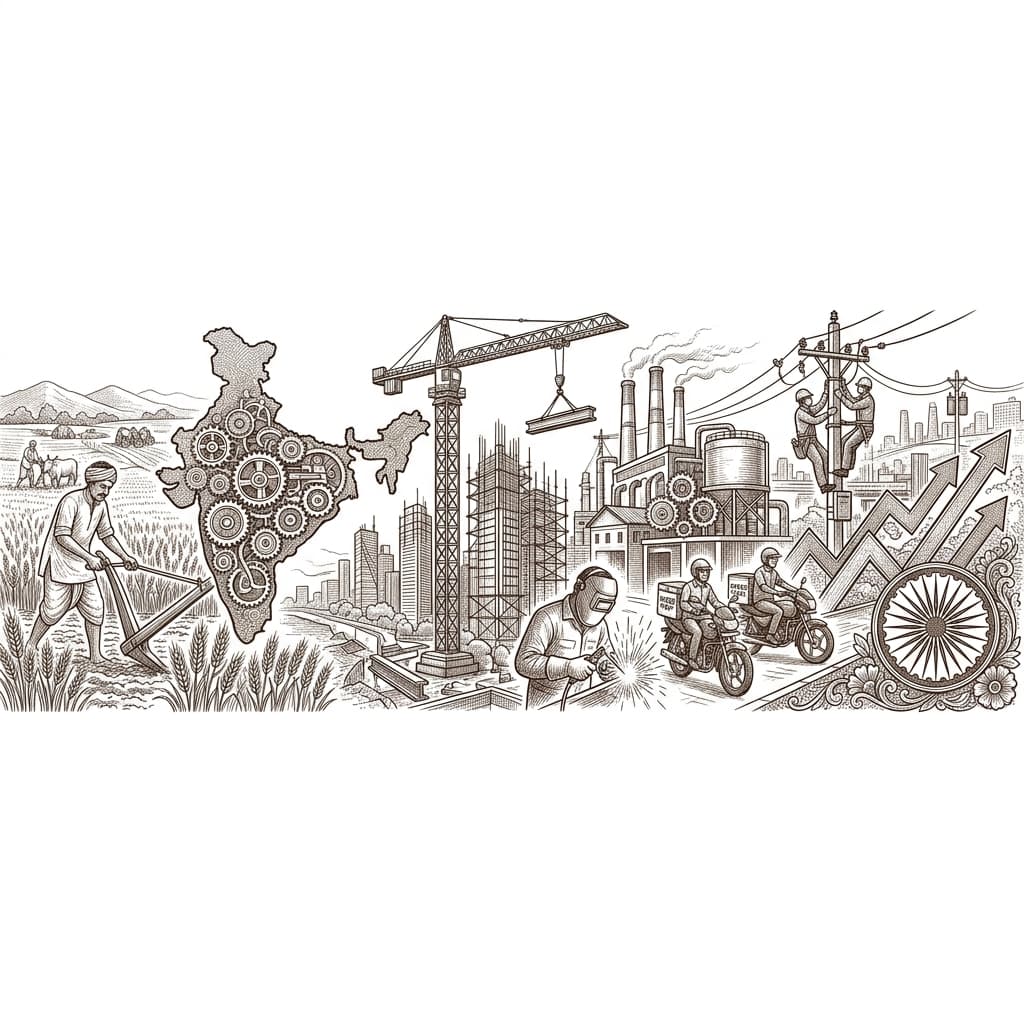
Approximately 43% of the workforce, i.e over 215M people, work in agriculture, seeking non-farm employment for 3-6 months during off-seasons. Localized platforms can connect them to verified jobs within a 10-20 km radius, ensuring accessibility and trust while mitigating post-harvest unemployment spikes, which can increase overall joblessness by up to 0.5 percentage points monthly.
4. Economic Impact
- 4A. Formalizing jobs through localized discovery could increase GDP by 1-2% annually, contributing $60-120 billion by 2030, as workers access higher-paying roles. Formal workers generate twice the GDP per capita compared to informal workers, with the formal sector accounting for about 55% of GDP in recent years.
- 4B. GST collections, which reached ₹22.08 lakh crore in FY 2024-25, could grow by 5-7% annually if 10% of informal workers transition, adding ₹1.1-1.5 lakh crore to revenues.
- 4C. Formal jobs, offering 20-30% higher wages than informal roles, could boost household consumption by $50-75 billion annually.
5. Reducing Migration
Internal migration affects around 400 million people, largely driven by economic necessity. Street level job discovery, such as a welder securing verified work in a nearby town, retains talent in local communities, potentially reducing migration by 20-30% and alleviating urban overcrowding.
How can we scale street-level platforms to realize this vision? Explore how JobsUPI connects workers to local opportunities across Indian cities, and how employers can hire verified local talent via multilingual voice discovery with Shanta tAi on the JobsUPI platform. For a deeper look at the systemic visibility challenge, read our companion piece on The Hiring Bottleneck.