
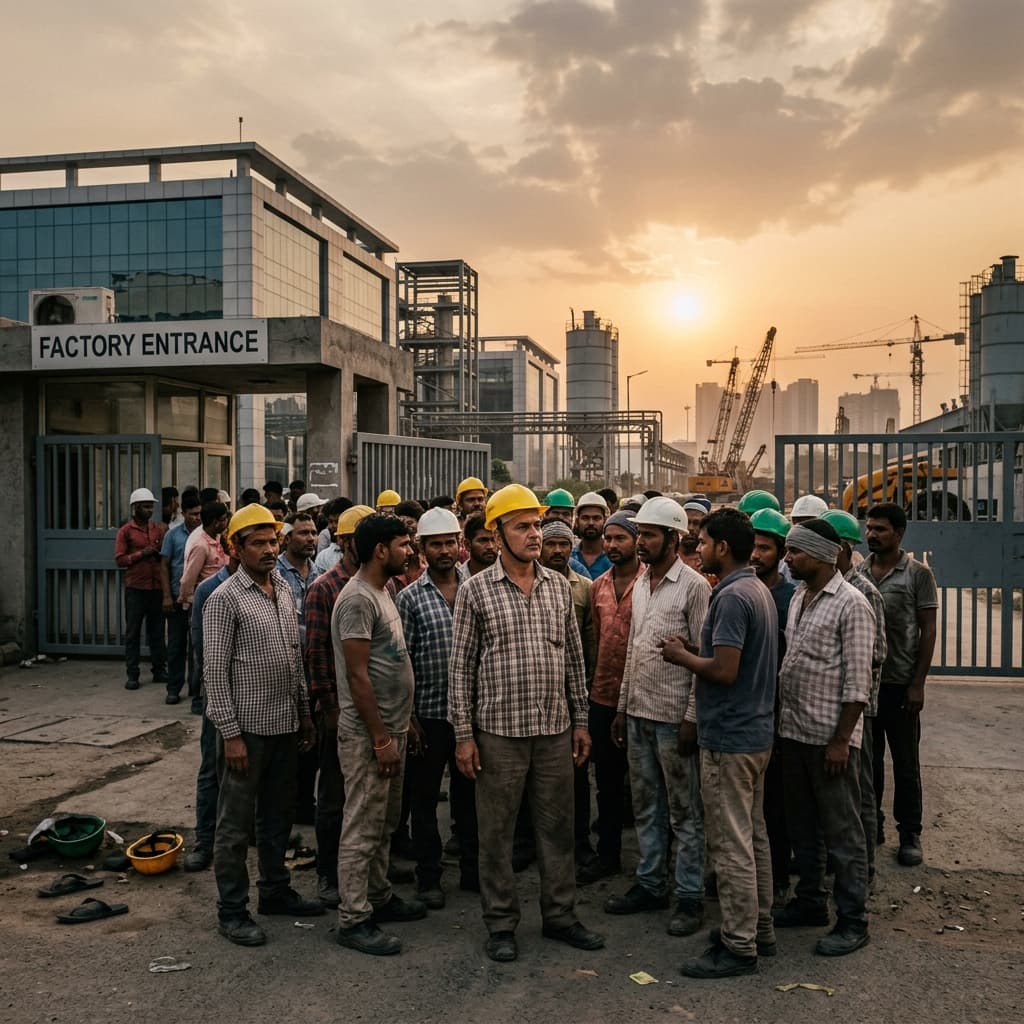
A group of workers gathering outside a factory gate in Noida isn't unusual. It's part of the daily rhythm of industrial India.
The recent labor protest in Noida appears to have been triggered by a mix of immediate workplace concerns and deeper structural issues. Reports indicate that workers raised objections around wage levels, delayed or inconsistent payments, and the growing reliance on contract-based employment, which often offers fewer protections compared to permanent roles.
In industrial clusters like Noida, where a large share of the workforce consists of migrant and semi-formal workers, even small gaps in pay clarity or job security can escalate quickly. Another factor adding to the tension is the broader regional shift in wage expectations: for instance, neighboring Haryana has recently revised its minimum wage rates upward (as per official notifications by the Haryana Labour Department), which indirectly raises expectations among workers in nearby industrial belts like Noida.
When workers see better benchmarks just across state lines but don't experience similar conditions, it can amplify dissatisfaction. Put together, these factors suggest that the protest did not start overnight, but built up over time through unresolved concerns around wages, stability, and fairness in employment.
Why This Matters
{/* CHANGE: Updated text to blue-collar and grey-collar */}At JobsUPI, we work closely with blue-collar, grey-collar, and entry-level hiring.
And what this protest reflects is something we see every day:
1. Jobs exist - but clarity doesn't
Many workers still don't have:
- Clear salary expectations
- Defined roles
- Written assurances
And when expectations don't match reality, frustration builds.
2. Contract work is growing - trust isn't
More companies are hiring through contractors and third-party vendors. But for workers, this often means less stability, less visibility, and more uncertainty.
3. Problems aren't sudden - they accumulate
Most protests don't start in a day. They build slowly through delayed payments, miscommunication, and lack of accountability until one day they surface all at once.
Where JobsUPI Fits In
We're building toward something this moment highlights clearly: a job market where roles are transparent, employers are verified, and expectations are aligned from day one.
Explore verified job openings in Noida, find driver vacancies and security jobs, or see how JobsUPI helps employers establish transparent hiring standards. Employers can also search our verified candidate directory or read our policy breakdown on India's Labour Codes.